
Transcript for (S7E6) South Station Tower: Rising Over Boston’s Historical Rail Hub
GRAHAM: The first time I saw it coming from New Haven, I approached it from the train.
BRIAN’S NARRATION: Graham Banks is a designer and a partner at Pelli Clarke & Partners, a firm behind landmarks around the world, from Salesforce Tower in San Francisco to Brookfield Place in New York and the International Finance Centre in Hong Kong.
GRAHAM: Most people know South Station, you know, if you're from Boston, you know it from Dewey Square. I knew it by coming in on Amtrak and was just a step below Penn Station where you just can't believe that a city of this magnitude, you know, with the level of quality and the reputation that Boston has, that this is how you arrive at the city. It was really shocking.
Vox Pop - Lisa Malvui: It was horrible. It was dirty. It was almost suffocating. You couldn't see out the windows.
Vox Pop - John Martel: It was pretty basic. It was just some train platforms and you just walked in from the outside right into the station. I mean, it served its purpose, but it wasn't that nice.
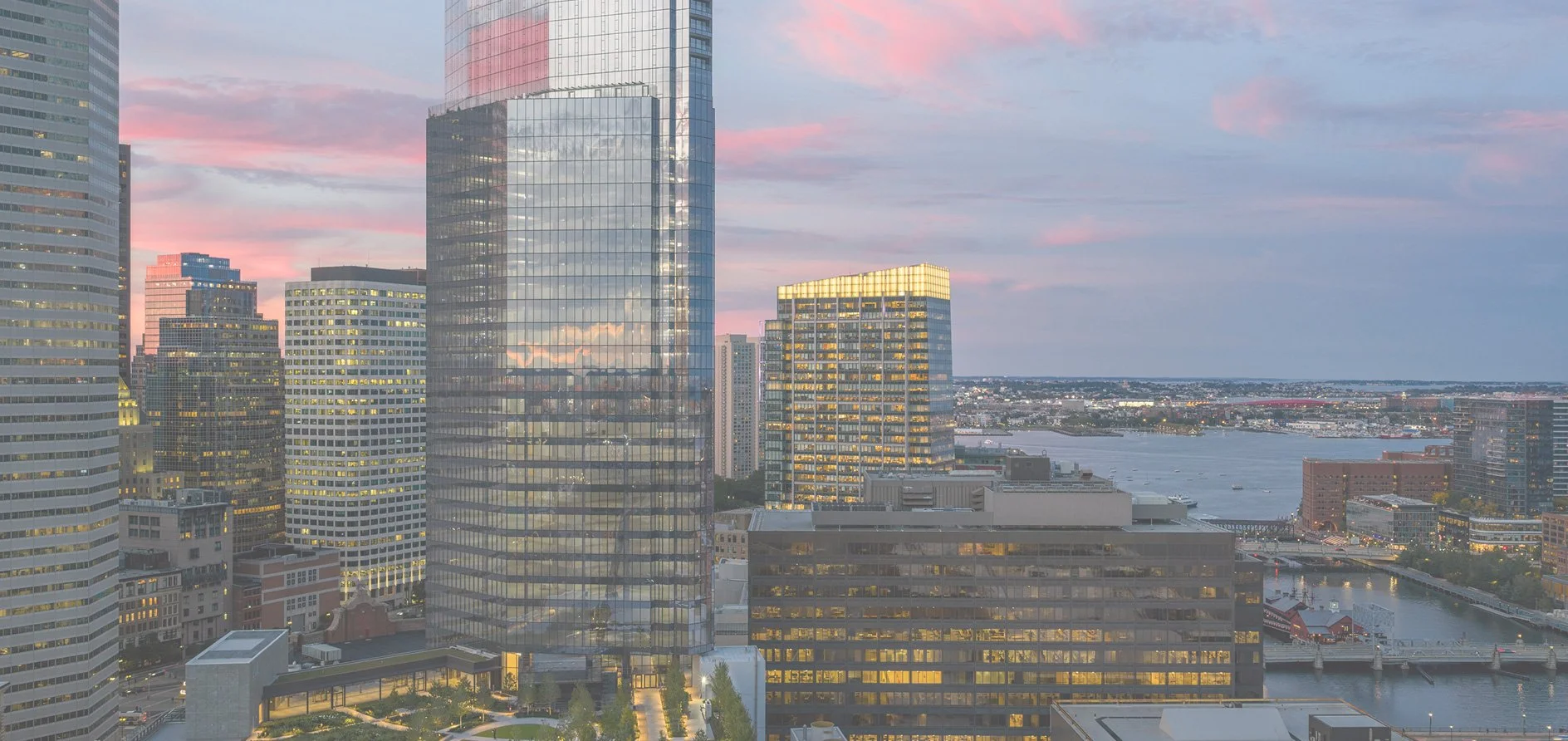
Brian’s Narration: These days, arriving here feels different. South Station Tower now rises directly above the station — a 51-story mixed-use project with offices, luxury residences, retail, and a Sky Park on the 11th floor.
But this isn’t only a tower story – the public side changed too. There’s a new concourse space, and an expanded bus terminal that boosts capacity by about 50%, making it easier to move between trains, the T, and buses.
GRAHAM: The boldness of this starts with the decision to build over an active train yard.
STEVE: We had to face how to keep the trains and the buses going throughout the construction process.
BRIAN’S NARRATION: And Boston isn’t alone. Around the world, cities are looking at stations like this and asking: what if the space above and around transit isn’t leftover… but the next place to build?
STEVE: Transit infrastructure is the most important and vital piece of infrastructure that exists in our cities. And that is where people wanna live, where they wanna work and where they want to play.
BRIAN’S NARRATION: I’m Brian Maughan, Chief Marketing and Innovation Officer at Fidelity National Financial, and this is Built, where you’ll meet creative leaders in commercial real estate. This season, we’re going BOLD. We're exploring big ideas, defining places, and the people who make them real.
In this episode, we’ll meet the people who made South Station Tower possible, and follow the bigger shift it represents: transit hubs as the next place to build — and the trust it takes to pull it off.
SEGMENT A — What was here before… and how the deal works
STEVE: South Station has always been a vital transit hub for the Northeast corridor and for the city of Boston.
BRIAN’S NARRATION: Steve Luthman is Managing Partner and Global Head of Real Estate at Hines, a global real assets investment development and operating platform. They have about $90 billion in assets, and manage roughly twice that when you include the work they do for other owners and investors. Here in Boston, Hines is the developer behind the South Station transformation.
STEVE: It is an iconic Beaux-Arts building that was always a beautiful building from the outside and always embraced the massive volume of commuter traffic that has existed.
GRAHAM: What most people don't know, and anytime I give a talk about the station or talk about the tower, is make sure you go back because it's always been evolving. It has never stayed still for longer than 10 years.
BRIAN’S NARRATION: Graham Banks of Pelli Clarke & Partners, is part of the team that worked on the most recent chapter of South Station's history.
GRAHAM: If you go back to when it was built, in 1899 it was finished. It was the largest covered station in the world.
BRIAN’S NARRATION: Perhaps the most recognized part of the structure is its headhouse. A pale pink granite facade that curves toward the square. Tall, smooth columns line the front, above three big arched entrances built to welcome travelers.
And up top, a giant clock — with a stone eagle perched above it — watching Boston come and go.
GRAHAM: By the late twenties, early thirties, it was the busiest train station in the United States.
Vox Pop - Paul Osborne: I remember reading about this place back during the second World War. It was a major transit location.
BRIAN’S NARRATION: We met Paul Osborn during our visit. He’s semi-retired now, but he spent years working in this building, and he knows the station’s lore. During World War II, South Station moved about 125,000 passengers a day, and in 1945, more than 46 million people passed through here, many of them servicemembers coming home.
Vox Pop - Paul Osborne: They even had a, a bowling alley. They had barbershops, hairdressing, everything
BRIAN’S NARRATION: There was even a movie theater in the 1950s that later turned into a chapel called "Our Lady of the Railways.”
GRAHAM: After the war, people started moving to the suburbs and people started to drive.
It got so slow the New Haven Railroad who was running the station, they went out, they went bankrupt, and they started tearing the station down. But fortunately a group of citizens stopped it because this was not long after Penn Station in New York got destroyed and they said, “we're not gonna allow that here.”
BRIAN’S NARRATION: In 1965, South Station was sold to the Boston Redevelopment Authority. Over the next decade, preservation momentum grew, and in 1975 the station was added to the National Register of Historic Places. Then in 1979, the BRA sold it to the Massachusetts Bay Transportation Authority, with a plan to revive it as an intermodal hub with bus, rail, and subway services while holding onto the air rights above for future development.
GRAHAM: By the mid eighties they rebuilt portions that they had destroyed. Today isn't even the original that was rebuilt.
BRIAN’S NARRATION: Back then they upgraded the rail side, built a new concourse, and added direct indoor access to the Red Line, so people could move from trains to the subway – aka the T – without stepping back out onto the street.
Then in 1995, the bus terminal opened with 29 bus gates and a parking garage.
STEVE: Hines has been working on this project directly for the last 27 years, but I like to say that this project is 125 years in the making because this project doesn't exist without the partnership with the Massachusetts Bay Transit Authority with the City of Boston planning department and with all of the various city stakeholders.
And it became possible because the city decided that they wanted to sell the air rights for this specific project, that's when Heinz started to get involved helping the city, and the Massachusetts Bay Transit Authority really conceived of what was possible in this location.
BRIAN’S NARRATION: What Boston put up for sale wasn’t the land or the building. It was the open space above the station – the air rights.
STEVE: When you own a piece of real estate, the expression is you own from heaven to hell, and so you own up and down, including the air that's directly above your piece of real estate. And what has happened in certain cities that have enjoyed densification over time is the air above existing buildings has become very valuable because you can build then higher density than exists on the base building that exists on that ground.
BRIAN’S NARRATION: Hines and its investment partners bought the rights in 2019. But it took years to close the deal, because selling space above transit is complicated. Even if you’re building “up,” the tower still has to touch down on real foundations below, right alongside active tracks and daily crowds. But the momentum was there.
STEVE: Cities are wonderful living objects that are constantly evolving and constantly changing. And what makes cities dynamic is having living and work and play and retail and restaurants and collaboration. Having all these different cultural uses together in certain nodes and transit has been a consistent piece of infrastructure that has attracted more mixed use type uses around it, because that's where residents want [00:09:00] to live. That's where they want to play, that's where they want to socialize. And so Boston was going through its evolution and the timing was really right . This became a real opportunity for the city leaders to help implement. Some of their objectives on creating transit oriented, mixed use development.
BRIAN’S NARRATION: So, the air rights were ready, the market was ready. But how do you build a 51-story tower over live tracks… without breaking the city?
SEGMENT B — The choreography underneath: design + construction
BRIAN’S NARRATION: If you stand at Atlantic Ave. and Summer St., you can read the whole story in one look. You’ve got the old headhouse at street level, and rising right above it, a new glass tower that mirrors the sky. About two-thirds of the way up, the building steps out into terrace-like ledges, a clear seam between two uses: offices on floors 12 through 34, and the Ritz-Carlton Residences from 36 to 51.
Step inside and you’re in the new concourse, what they call the “Great Space.”
Vox Pop - Naima Benoit: It's like very big archways, like white archways, that are lit up and connected to each other.
And then in front of you, there's like numbers one through 13 which show where each train is. And then there's the train gates. Where like it's a tap to enter gate, so they're like small, rectangular, and you tap them and then two clear doors pushed to the side.
Vox Pop - Deverie Bongard: The station itself had charm, now it's got a little more glitz and not bad.
Vox Pop - Christina Bolter: It seems open and more modern.
Vox Pop - Deverie Bongard: Those arches are pretty amazing. I think that this is very amazing architecture, the new look.
Vox Pop - Moussa Traore: It's gone through such a dramatic change. It almost feels like a completely different place. It looks like more like a monument, beautiful arches everywhere and lights lining them. It's really something special.
Vox Pop - Lisa Malvui: You can walk through here and not be like, "eww", guess the best way to word it. It's not an eyesore anymore.
BRIAN’S NARRATION: Your eye goes to the arches, then to the mega-columns holding up the 51-story tower. It’s striking. And it’s doing real work.
GRAHAM: We had two big problems.
BRIAN’S NARRATION: Designer and Pelli Clarke's partner Graham Banks.
GRAHAM: First we had to bring down all the weight of the tower somehow on a very, very small footprint. And second, and just as important we had to alleviate the congestion at the concourse, the outdoor arrival at South Station. How we did that was up to us, but to get the air rights to build the tower, we had to improve the outdoor concourse. And so the solution that we came up with for the structure of the tower was also the solution of how we created the new space at the concourse.
The best architectural solution for bringing the weight down onto just eight super columns was an arch.
The initial intent was to have the actual structural arches be what you see when you come into the great space. But given that it's the highest strength concrete ever used in Boston. And it's extremely hard to pour 'cause the temperatures are incredibly hot, but you don't have any control over how it looks. So we said we'll let the structure be the structure and we'll clad it.
So then we wrapped it with concrete and plaster on the interior to making the domes within that helps the sound and brightens the space.
BRIAN’S NARRATION: By linking the mega-columns with concrete arches, they carved out a series of antichambers beneath these shallow domes that float about 60 feet overhead.
GRAHAM: What everyone forgets when you're in there, certainly in the spring, is that you're actually outside. It's an exterior space, it's gotta be super durable for Boston weather, for really hot and really cold wind, rain, birds, everything. It has to be able to hold up against the worst that nature can throw at it and the public, so everything's gotta be durable and be able to clean and take care of it. That's why there's no marble and it's really rugged, but the point was still have it be refined.
That's where you take your breath [loud breath] and then you're on with your day.
BRIAN’S NARRATION: On with your day to work, or maybe to meet a friend for lunch. Food’s easy to find here. In the main concourse, you can grab quick bites, and there’s even a Tavern in the Square tucked inside if you want a real sit-down.
BRIAN’S NARRATION: To make the project possible, the team also built new structure over the 13 live rail tracks and platforms. That created the footprint to expand the bus terminal, adding about 50% more capacity and tying it directly into the rail and subway connections.
GRAHAM: The bus station was another block to the south and disconnected. You had this huge walk from people from the South station bus station back to the head house. So now the 10,000 plus riders of buses are now also part of the South station. They're not second class citizens, a block away that then they have to walk with the roller bags along Atlantic Avenue.
BRIAN’S NARRATION: It also made room for a large parking garage. That structure climbs to the 11th floor where it tops out a massive park space that connects with the tower.
And building all of that was not easy.
STEVE: The latest number I've heard is 128,000 people on a daily basis come through South Station. So how to make that experience of the vital infrastructure that exists also embrace a new construction.
BRIAN’S NARRATION: Hines' Global Head of Real Estate, Steve Luthman
STEVE: Logistically that is a major challenge that requires time. It requires great partnership with our architects, our structural engineers, our contractors.
PAT: Our team really pre-planned this job for many decades as the project was in its conception.
BRIAN’S NARRATION: Pat Lucey is the president of the Northeast office at Suffolk Construction, the firm that built South Station Tower. He’s been with Suffolk for more than two decades, and he first heard about this project at the very start of his career, back when it was still just lines on paper. Since then, he’s spent years building in Boston and other dense cities, where the job isn’t just construction. It’s choreography.
PAT: We know that there's gonna be zero space to do anything, and you have to plan every single thing that you do at a minimum down to the day, if not [00:15:00] down to the hour.
One of the things that was really important for our team was recognizing that there could be no disruption to any of the active services.
So, making sure that the MBTA, making sure Amtrak, making sure you know, any of the commuters, traveling in and out of the head house, understanding that there would be no impact to them.
So the goal was to plan around them in the safest most logical way possible. So our team really started to think about our logistics plans, how and when we were gonna do that work many years in advance.
BRIAN’S NARRATION: On a project this intricate, with state agencies, transit teams, and the City all in the mix, Suffolk treated the plan like a living document. They’d draft it, then bring everyone to the table to review, revise, and fine-tune it together—until the whole machine could run smoothly.
PAT: All phases of construction are very different. Right. Sometimes you're digging down and working underground. Sometimes you're working above ground. Sometimes you're working outside a building. Sometimes you're working inside the building. So just with the understanding that those things were gonna happen at different moments in time, and trying to create that alignment with the other stakeholders, the other agencies, I think was really critical.
BRIAN’S NARRATION: Construction began in early 2020. To make it work over live rail, the team coordinated tightly with the MBTA and Amtrak, scheduling brief, specific shutdowns so crews could work above the tracks and around critical systems like power.
PAT: We would do most of that work on the third shift between 11:00 PM and between 6:00 AM you'd take off, very small increments because you needed to make sure that all of the work was completed for the next morning.
You need to make sure the weather is right and no one's on vacation and no one's children are sick.
And like things like that normally happen to make sure you get the right crews and right people. But working through those and then ultimately saying it's a go tonight and these are the things that need to take place and planning accordingly hour by hour at a minimum. There are some instances on some of this work that where we would plan like to the 15 or 20 minute increment, just to make sure the work was completed in a timeframe and we could get the track back active for the next morning.
BRIAN’S NARRATION: 27 years might sound like a long time, but big, transit-linked mixed-use projects demand patience—and real commitment.
STEVE: There's been a number of challenges that have faced the development community over those those decades.
BRIAN’S NARRATION: Hines’ Steve Luthman says the project had to ride out major economic shocks, starting with the 2008 financial crisis, which slowed real estate development across the country. But he says Hines, its investment partners, and public agencies stayed committed.
STEVE: Of course, during the course of any project, there are very large decisions that need to be made. I can think of the decision to go forward amidst the COVID pandemic. When we look around the world, there was a fear that existed on what does the future look like for cities? What does the future look like for office space? And to have the conviction to go forward at that time when development had essentially shut down when we were all staying home. I think we knew that if you are willing to move with conviction when others are potentially afraid, those will be the projects that will ultimately outperform all others.
BRIAN’S NARRATION: As you enter the tower, the lobby is really just a gateway.
GRAHAM: We call it the shuttle lobby, where you've got a short elevator ride up to level 9 and level 11, where you then connect across to the tower.
BRIAN’S NARRATION: This part is private. Five big elevators take you up to the shared amenities: conference space, a fitness center, and grab-and-go spots.
And because the tower rises behind South Station’s historic headhouse, it doesn’t sit right on the sidewalk. Instead, you’re pulled inward — and up — to the 11th-floor Sky Park: a nearly one-acre landscaped terrace above the station, reserved for residents and office tenants.
We visited in winter, so when the elevator doors open, the impact is immediate: floor-to-ceiling glass, a snow-dusted park, and the city stretching out beyond it. There are paths and places to sit — and pet-friendly areas — with more outdoor features still being finished. And from here, you can look up and watch the tower keep climbing above you.
PAT: There's a lot of engineering complexities associated with it, every single thing that we do, we model 3D virtually ahead of time.
BRIAN’S NARRATION: Besides the mega-columns, the team was also juggling two different structural systems inside the building.
PAT: The first structure we had was structural steel because structural steel, the way it lays out is optimized for an office building, really expansive, open floors, there's a lot of flexibility among it.
And then traditionally in Boston residential buildings have been built in cast in place concrete, better for sound sometimes more cost effective. And we transferred from a steel building to a concrete building up on the 36th floor, where traditionally that may happen, either underground or at grade, doing that 300 feet in the air is a pretty complex activity too.
BRIAN’S NARRATION: Most of the steel and concrete came from the U.S. and Canada. And the building was designed to hit big sustainability and wellness goals, like LEED, WELL, and BREEAM.
Up on the 30th floor, the view goes panoramic. To the north, you catch a tight cluster of towers. Turn the other way and it’s mostly sky—miles of it. Look down and you can watch trains glide in and out of South Station.
And the vibe shifts as you move through the building. The office floors are bright and crisp with white finishes and cool steel. Upstairs, the Ritz-Carlton Residences feel warmer: 166 condos on the top 16 floors, all floor-to-ceiling glass, with finishes in walnut, bronze, and brass.
PAT: It's a really high end building. And now it's known as the Ritz Residences. The residential units are beautiful. The expectations of the individuals buying those are that, you know, it's a great quality product.
And Having done a lot of significant high-rise projects in Boston, I would say that um, the roof of a building is really unique. To be able to see the skyline, to be able to look over the airport and the seaport district in South Boston. Honestly what I love about the roof line in that end of this building is that's really where you're able to witness the work of thousands of people. 'cause physically it's actually put in place at that point in time.
And I love being able to think about how we as a team through the client, the architect, the engineers, all the trade partners we're able to come together and not only make it so beautiful, but make it such an iconic place in Boston.
BRIAN’S NARRATION: Pelli Clarke's Graham Banks also thinks of the tower in the context of the city.
GRAHAM: the tower actually cantilevers out over the top of the station. It hangs out over the top through structural gymnastics, but we don't touch any of the station. We always wanted to have the tower be referential [00:23:00] to this classic piece of architecture that everybody associates with Boston. The design always wanted to recede, and that was always been our biggest challenge 'cause you still have to balance having enough tower to make it financially feasible to be able to build all the improvements. One can't happen without the other.
BRIAN’S NARRATION: Graham says South Station Tower could end up anchoring the east side of Boston’s skyline for a long time—because just across the Fort Point Channel, the Seaport sits under Logan’s flight paths, with FAA height limits that keep most new buildings there much shorter.
GRAHAM: It really balances the Hancock Tower to the West, which has always bookended the end of the skyline. The central business district is that zone between one side to the other.
SEGMENT C — Beyond Boston: the model, the global trend, the playbook, the future
BRIAN’S NARRATION: But of course, a project of this magnitude also has detractors.
Vox Pop - Joan Gladue: it was a beautiful old station. We didn't need to have a skyscraper sticking out the top of it.
BRIAN’S NARRATION: And when we talked to people around, one thing came up again and again.
Vox Pop - Christina Bolter: There's plenty of high income housing throughout the city. Um, So I think, if there was more affordable housing, that would be better,
Vox Pop - John Martel: the commercial aspect of it I think is good. As far as the businesses or restaurants that they put in there. 'cause it's a hub. A lot of people travel in and out of here. But uh, the residences, I don't have $15 million, so I can't buy one.
Vox Pop - Kimberly Grace: Boston is an expensive city. It's a world class city, but to be a homeowner in Boston is almost next to impossible.
BRIAN’S NARRATION: Most of the homes here list from about $1.2 million up to around $14 million—well above Boston’s median sale price, which is reported at $825,000 in January 2026 by Redfin.
STEVE: The development also made a, a pretty material investment in the affordable housing fund for the city of Boston. Housing affordability and the shortage of housing that we experience all over the country and Boston is no exception, is a function of a shortage of housing.
BRIAN’S NARRATION: Hines' Steve Luthman
STEVE: What we need as a developer to do is continue to build all types of housing. That includes building affordable housing, market rate housing, luxury housing, includes building multi-family, senior housing horizontal development to include single family homes. And we believe that the creation of more supply of residential is the answer to a lot of the affordability challenges that exist today. And so, while South Station fits in one of those niches. It is helping to provide more supply and that is what is necessary to help alleviate the affordability challenge.
But this is not just a United States problem all around Europe, Asia, I think about Japan and Korea and Australia. All markets are experiencing a shortage of housing. So as a developer, we do have a responsibility to find ways to develop more housing in every product class in the marketplace.And that's what we're doing.
BRIAN’S NARRATION: Pelli Clarke & Partners’ Graham Banks says this is one of those big projects everyone has access to, something tens of millions of people move through every year.
GRAHAM: You don't get that with most towers, right? Usually it's just a big tower taking the block. This is totally different because everyone gets to experience it in a physical way.
BRIAN’S NARRATION: And if South Station Tower feels like a once-in-a-generation story, Steve says Hines sees it a little differently.
STEVE: That trend towards highly connected urban transit oriented projects is one that's been occurring around the world for the last couple of decades and has only since, I would say the last 10 years really taken hold in the major markets in the United States.
BRIAN’S NARRATION: Steve says Hines thinks about city growth beyond what they build. It’s also about where they invest, and how they partner with local leaders.
STEVE: These districts are so important for our cities and for Hines to have not only the opportunity, but the responsibility of helping shape the next generation of the world's leading transit facilities. We take that responsibility incredibly seriously. And it also, because we've had so much success in doing it. It leads to new opportunities with cities as they're thinking through how they're going to activate and densify their transit infrastructure.
BRIAN’S NARRATION: And for him, transit hubs are key. Stack the right mix of uses around them —offices, homes, shops, public space— and you can change what a neighborhood feels like.
STEVE: Look, developing next to or on top of transit facilities is one of the most challenging things that we can do as a developer, but it's also one of the most impactful things that we can do as a developer or an investor. We think about our strategy, whether it be the development of One Vanderbilt in New York adjacent to and alongside of Grand Central Station, or we think about our CIBC square project, which is a 3 million square foot development that is located on top of the rail at Union Station in Toronto or Porter Novo in Milan that was developed alongside the Garibaldi train station.
BRIAN’S NARRATION: And they’ve got a refined playbook for projects like this.
STEVE: One of the great things about Hines is we have 70 years of history and tapping into that knowledge base is something that we do each and every day. We do say that we've made every mistake that there is possible in development. We just try not to [00:29:00] make the same mistake twice. And for our teams, whether they be in Boston or whether they be in San Francisco, Chicago, or Mumbai, to be able to look around the world and say "what were the success factors of that project and how can I translate those projects to the local context in which I'm operating?" It's a great asset.
BRIAN’S NARRATION: But these projects only work if the public and private sides can stay in step for years, or for developments like South Station Tower, decades.
STEVE: We as an organization try to start the project by listening to what is important to the local neighbors. What would they like to see in the project? What is important to our city stakeholders? Listening to them first and foremost really helps inform the design and the use and the program that we ultimately develop.
So every project is a public-private partnership. With large scale transit oriented projects, it is simply magnified because you're inserting oftentimes local transit authorities statewide and federal transit authorities.
In the case of South Station Tower or River Point in Chicago, it included the Amtrak group as well who were deeply involved.
BRIAN’S NARRATION: All in, South Station Tower cost about $1.5 billion. The deal wasn’t just a private tower, it came with major public upgrades too, including the new concourse and a bigger bus terminal. And Hines says office tenants like Jones Day, FM, and Citadel have already signed on.
STEVE: I think there can be no greater expression of a bold investment and development strategy than building on top of a transit facility. This is a global opportunity and it's one that is not for the faint of heart.
BRIAN’S NARRATION: And Graham, the designer, sees the same idea from ground level.
GRAHAM: Things go up and down, nothing ever stays the same. And, some things take longer to change. You know, this has been almost 130 years with South Station. I'm just excited to see where the area's going next. Because this is just a note in the score. Right. It's just one piece of the conversation. It's gonna continue to change and it's just such an honor though, to be part of that conversation that goes back to the late 1800s.
PAT: You're building these buildings for people and people have their lives in them.
BRIAN’S NARRATION: Suffolk Construction's Pat Lucey
PAT: It's really special to have that type of trust put in you, not just during construction but afterwards, where people are actually gonna spend a portion of their lives in these buildings.
BRIAN’S NARRATION: Graham Banks hopes South Station Tower becomes one of those skyline icons you just expect to see. The kind of image kids grow up with, where “Boston” is the station with the tower rising right above it.
GRAHAM: The point is that it's just a center of growth and that whole area begins to redevelop and the leather district is gonna get built up and improve and there'll be more connection to the seaport. And I think there'll be more changes along around Dewey Square as some of those buildings age out. And I think that it just wants to continue to be an active part of the life of the city.
STEVE: These projects they're a hundred year projects. They will exist far beyond our lifetimes.
BRIAN’S NARRATION: Hines' Steve Luthman
STEVE: I hope South Station Tower really becomes a beacon and an inspiration for future development in this location. I think it will.
BRIAN’S NARRATION: If you want to check out photos of Pearl, visit us at builtpodcast.com. Built is a co-production of Fidelity National Financial and PRX Productions. From FNF, our project is run by Annie Bardelas. This episode was produced by Sandra Lopez-Monsalve. Our location producers: In Boston, Nico Rivers, in New Haven, Jonathan McNicol, and in Chicago Lou Carlozo. Our editor is Genevieve Sponsler. Production support by Adriana Rozas Rivera. Audio mastering by Rebecca Seidel. The Executive Producer of PRX Productions is Jocelyn Gonzales.
Special thanks to our guests, and to Marisa Monte-Santoro, Chris Linville, Sean Neary, Lisa Malvui, John Martel, Paul Osborne, Naima Benoit, Deverie Bongard, Christina Bolter, Moussa Traore, Kimberly Grace, and to everyone who talked to us at South Station.
Thanks for listening to BUILT—where we explore bold developments in distinct markets, reshaping our BUILT world.